
Message Testing
Public Support for Reproductive Rights Referenda With and Without Fetal Viability Limits

While existing research demonstrates high levels of public support for abortion rights, it is unclear whether that support is dependent on the right to abortion being limited in certain circumstances.
Our new message-testing research addresses this gap by examining fetal viability limits, a policy restriction often included in abortion rights referenda. Building on a 2023 PerryUndem poll, we explore whether support for a hypothetical reproductive rights referendum varies depending on whether and how it addresses fetal viability.
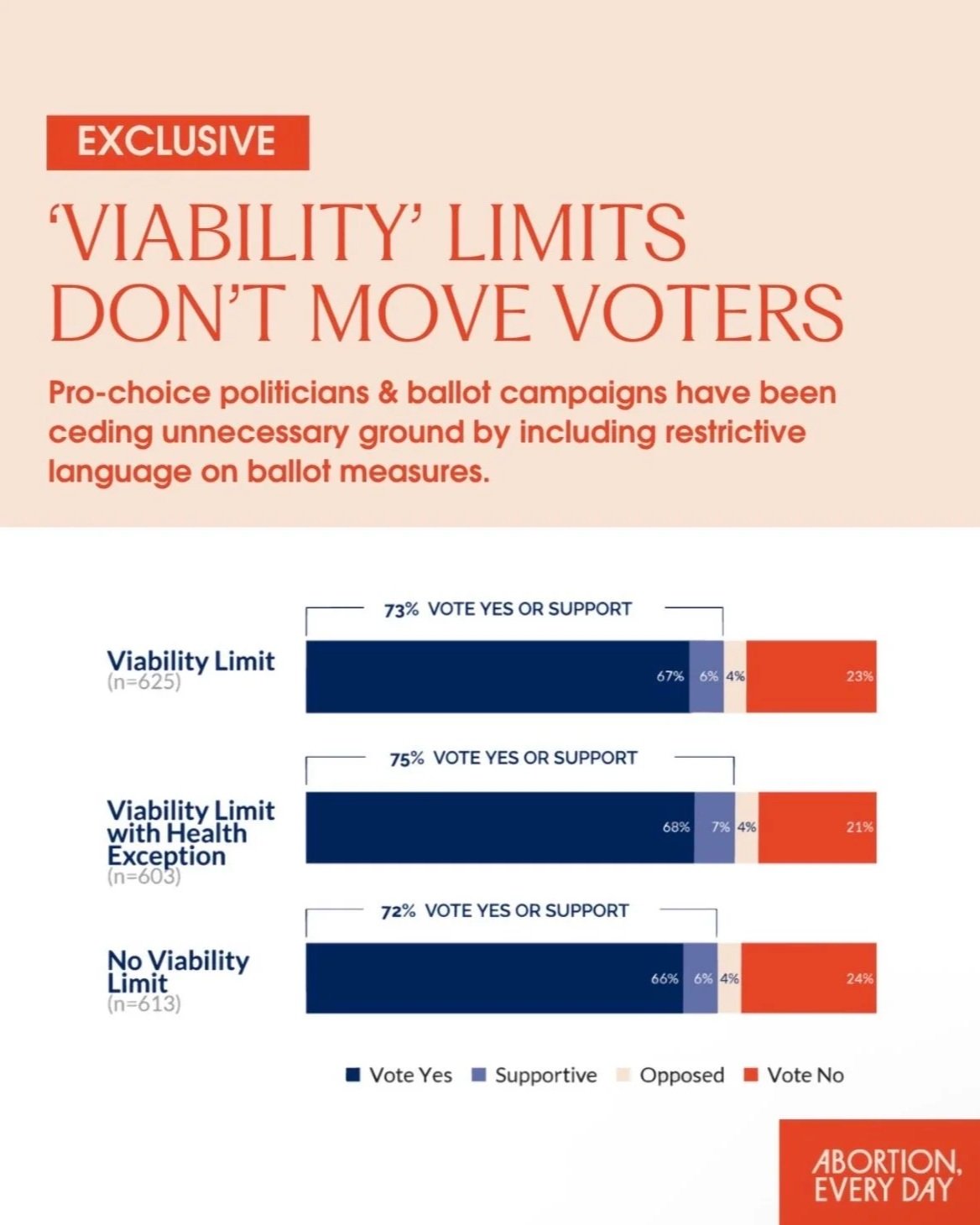
Featured in Abortion, Every Day
Journalist Jessica Valenti recently published an exclusive first look at these message-testing findings ahead of our forthcoming Emory Law Journal article. Explore her coverage below to learn what our results reveal about the limitations of current reproductive rights strategies and new opportunities for evidence-informed policy.
How Did We Measure Voter Support?
To answer this question, we conducted a randomized survey experiment on Prolific. We surveyed 2,000 eligible in a national sample that matched U.S. population distributions for age, sex, and political affiliation. We randomly assigned participants to view one of three versions of a hypothetical reproductive rights referendum. We stratified randomization by political affiliation, so that each referendum was viewed by similar proportions of people with republican, democratic, or independent party affiliation.
Referendum Conditions
A strict viability limit: A reproductive rights referendum that protects abortion only until fetal viability
A viability limit with a health exception: A reproductive rights referendum that protects abortion only until fetal viability, with an exception for the pregnant person’s health.
No limit: A reproductive rights referendum that does not place any limits on the right to abortion.
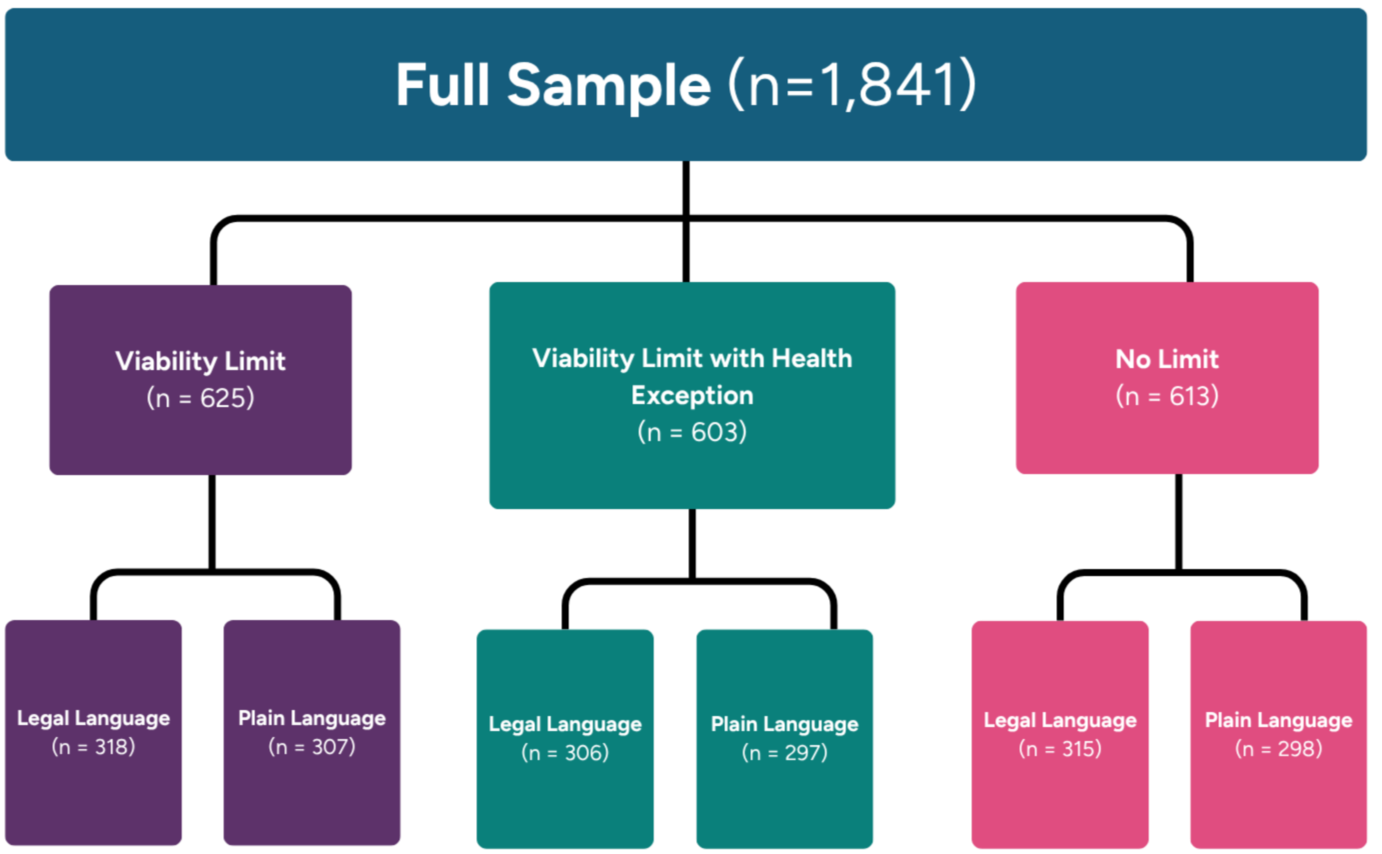
Participants in each group were asked whether they would vote for the measure, vote against it, or not vote on it.
They were also asked whether seeing the measure on their ballot would make them more likely to vote, less likely to vote, or not change the likelihood that they would vote. If they said they wouldn’t vote on it, they were then asked if they supported or opposed the measure.
We calculated frequencies and basic descriptive statistics for our variables of interest, including the proportion of participants who said they would vote for each referendum version, and compared these proportions across the three versions.
KEY FINDINGS

Two Thirds of Participants Would Vote for the Referendum, Regardless of Viability Limit
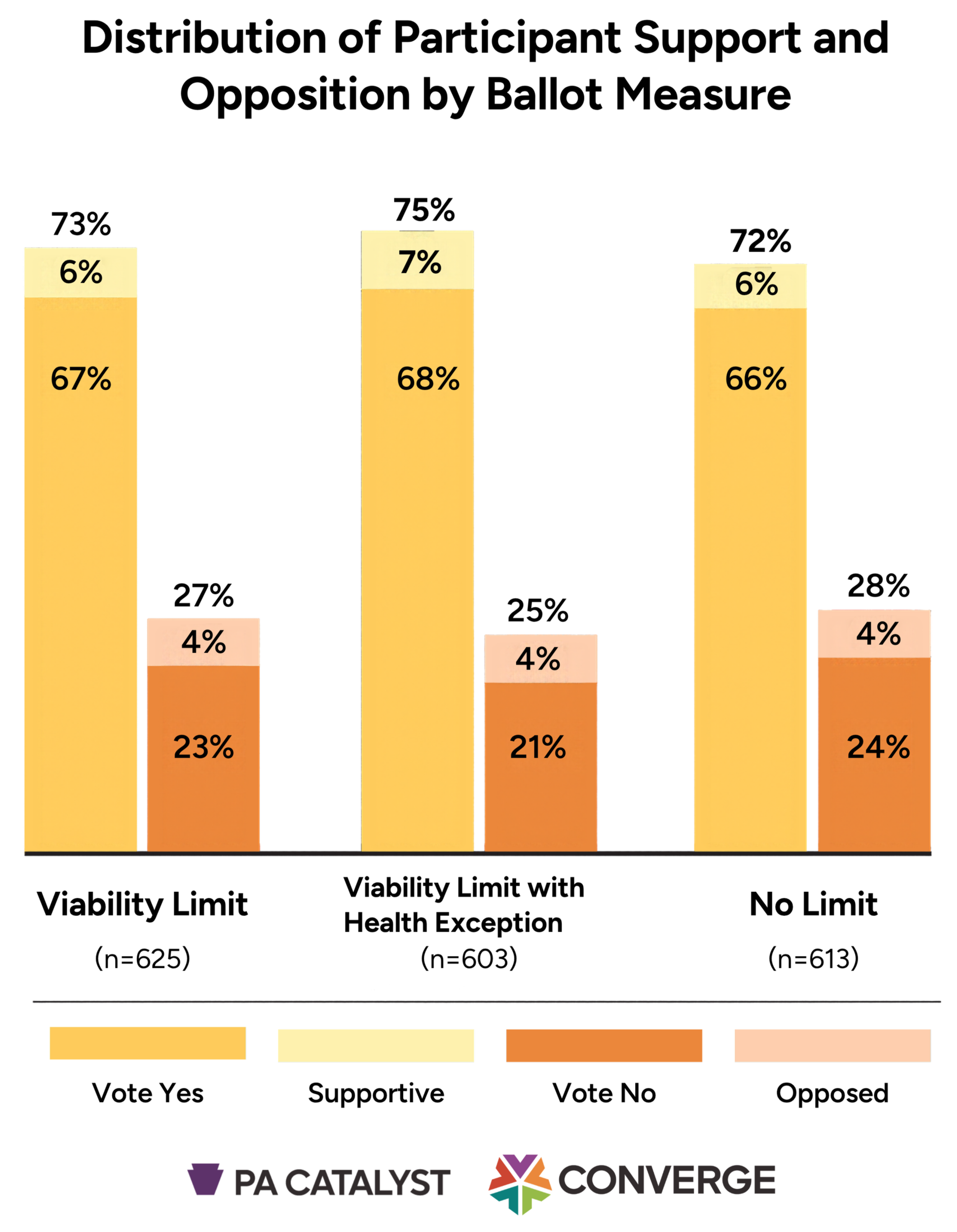
The proportion of participants who said they would support an abortion rights referendum was similar across all three versions. Among those randomized to each condition, 67% reported that they would vote ‘yes’ to a referendum with a viability limit, 68% would vote ‘yes’ to a referendum with a viability limit containing a health exception, and 66% would vote ‘yes’ to a referendum without a limit.
The differences were small and not statistically significant, suggesting that the viability limit is not a meaningful consideration for eligible voters on abortion rights referenda.

KEY FINDINGS
The majority of participants in each condition reported that having this abortion rights referendum on their ballot would make them more likely to vote.
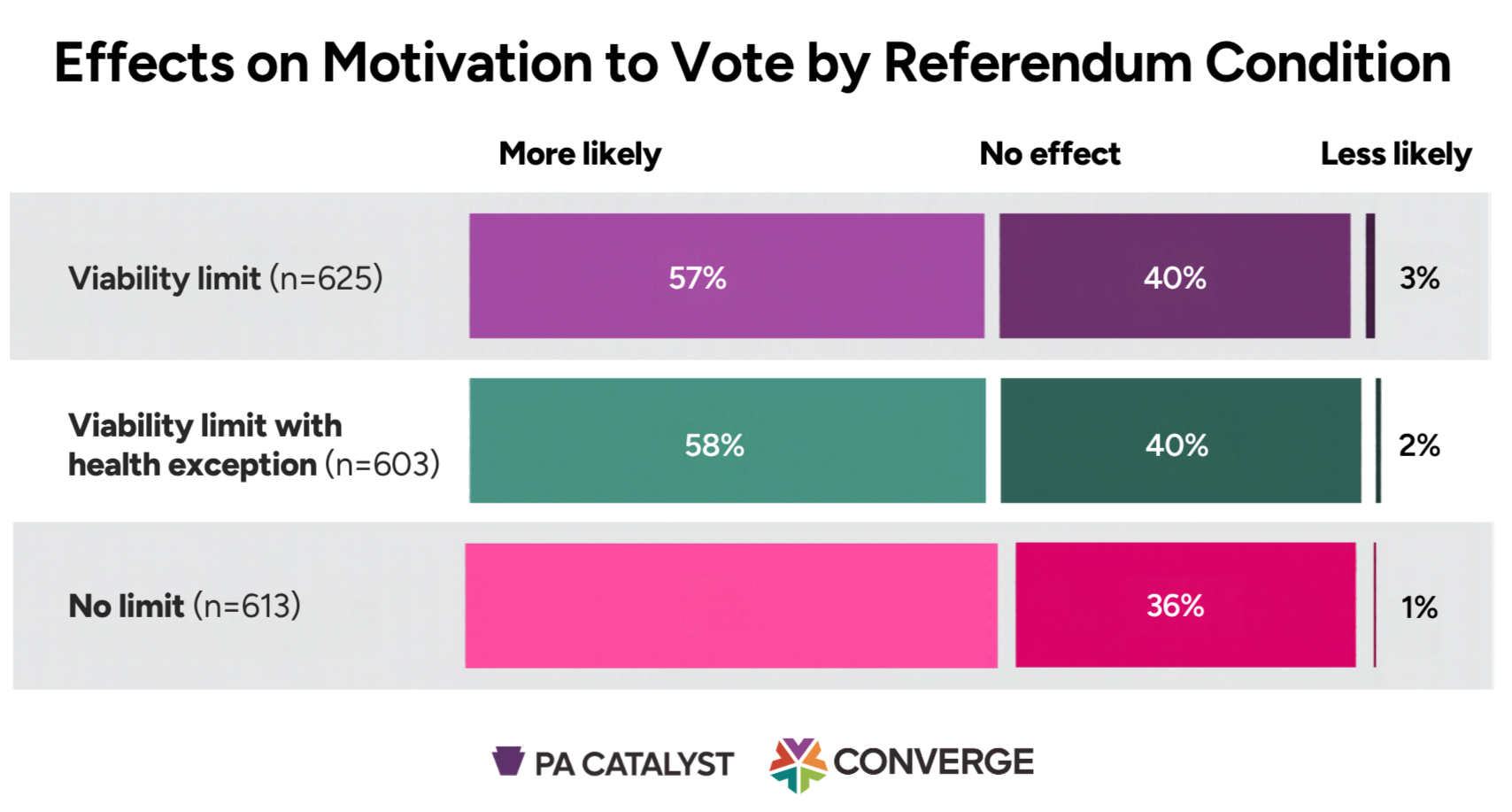
When asked if it would make them more or less likely to vote, 57% seeing the strict viability limit version, 58% seeing the viability limit with a health exception, and 63% seeing the no limit said it would make them more likely to vote. Only 1% to 3% of participants across versions said it would make them less likely to vote.
These results suggest that placing an abortion rights referendum on the ballot could motivate voter turnout.

Implications for Pennsylvania
While the results from a national sample do not reflect specific state contexts, these results suggest that more expansive reproductive rights referenda may have similar levels of support as those with restrictions. The next iteration of this work will investigate these questions in Pennsylvania.